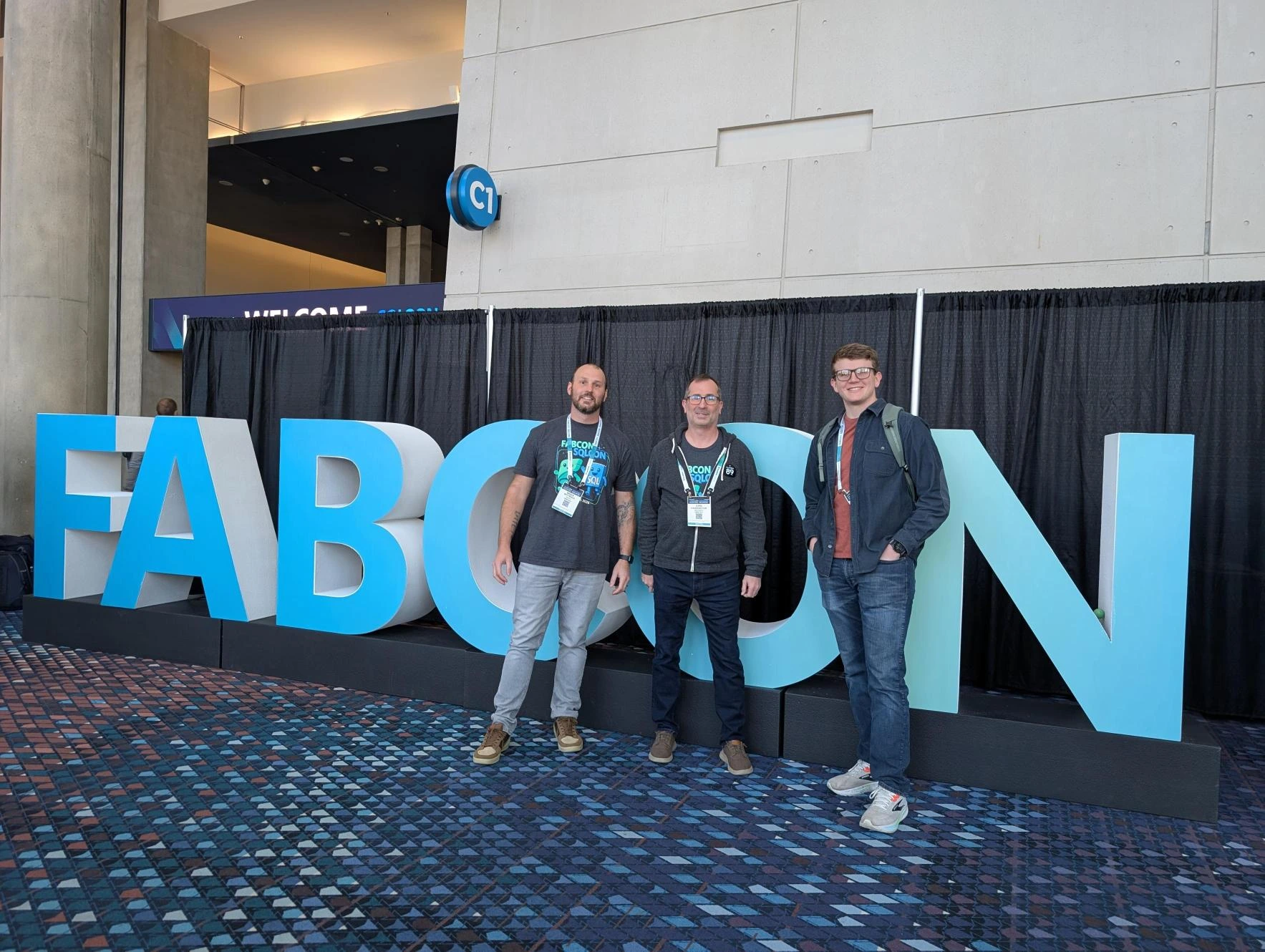
Attending Microsoft FabCon 2026 in Atlanta (March 16–20), one thing became immediately clear: Microsoft Fabric is no longer just a unified analytics platform—it’s evolving into an intelligent, AI-native data operating system.
Across the sessions, and especially the keynote, the messaging was consistent. Fabric isn’t just about consolidating workloads like data engineering, warehousing, and Power BI—it’s about fundamentally changing how we interact with data by embedding AI and automation directly into the platform.
The keynote leaned heavily into the idea that traditional data platforms are too fragmented and too reactive for today’s needs. Fabric’s value proposition is the consolidation of services into a single SaaS experience backed by OneLake—but now with AI deeply integrated into every layer.
What stood out was this shift in mindset: instead of building pipelines and reports that users interpret, we’re moving toward systems that interpret the data for us. The combination of Copilot, semantic models, and AI-assisted tooling is pushing Fabric toward a model where insight generation is increasingly automated.
From a technical standpoint, this has implications for how we design solutions. Data modeling, governance, and lineage are no longer just best practices—they are now prerequisites for enabling AI to function effectively across the platform.
AI wasn’t presented as a future capability—it’s already embedded across Fabric workloads. In the sessions we attended, we saw practical implementations of AI in:
Data Factory pipeline generation and troubleshooting;
Automated semantic model creation and measure suggestions in Power BI;
Natural language querying over large datasets;
AI-assisted data quality and anomaly detection.
What’s important here is that AI is context-aware. Because everything is built on top of the same underlying data in OneLake, these tools can leverage metadata, relationships, and business logic that are already defined in the model.
For someone working in dimensional modeling and semantic layers, this reinforces the importance of clean star schemas and well-defined measures. The better your model, the more effective these AI features become.
Another major theme at FabCon 2026 was the evolution of CI/CD as a first-class capability within Fabric. What used to be a patchwork of Git integration, manual deployment steps, and environment-specific workarounds has matured into a cohesive, automated DataOps workflow.
Microsoft showcased how Git-backed development, environment isolation, and deployment pipelines now span the entire Fabric ecosystem, encompassing semantic models, notebooks, pipelines, Lakehouse artifacts, and even agent configurations. The message was clear: data assets should be treated like software assets.
Most compelling was how CI/CD is becoming intelligent. Fabric now supports automated validation, schema checks, and AI-assisted change detection before promoting artifacts between dev, test, and production. Combined with agents, this creates a feedback loop where deployments aren’t just automated—they’re safeguarded. It’s a shift from “push changes and hope” to “push changes with confidence,” and it signals a future where operational stability is built into the platform itself.
The most forward-looking concept at FabCon 2026 was the introduction of data agents. These aren’t just scripts or scheduled jobs—they’re autonomous processes that can monitor and act on your data environment.
We saw agents that can:
Detect pipeline failures and attempt remediation.
Monitor query performance and suggest optimizations.
Identify anomalies in fact data and trigger alerts or workflows.
Assist in maintaining data quality rules over time.
This blurs the line between data engineering and operations. Instead of manually monitoring pipelines or performance, we’re moving toward a model where agents handle routine operational tasks.
For teams working in environments such as Microsoft Fabric Warehouse or Lakehouse architecture, this could significantly reduce the overhead of managing ETL/ELT processes, allowing greater focus on modeling and business logic.
While AI and agents got most of the attention, OneLake remains the foundation that makes all of this possible.
From a technical perspective, OneLake’s “single copy of data” approach simplifies a lot of the architectural challenges we typically deal with:
No duplication between the warehouse and BI layers
Direct Lake mode enables near real-time reporting without import models.
Consistent security and governance across workloads
What resonated is how critical this is for AI. Without a unified storage layer, you can’t reliably apply AI across different tools and datasets. OneLake essentially provides the shared context that both AI and agents rely on.
Upon leaving FabCon 2026, the biggest takeaway is that the role of a data professional is shifting. We are moving away from just building pipelines and reports toward designing systems that can reason about data.
AI and agents will handle more of the repetitive and operational work, but that only works if the underlying data model is solid. Concepts like dimensional modeling, surrogate keys, and governed semantic layers aren’t going away—in fact, they’re becoming more important.
Microsoft Fabric is clearly betting on a future where data platforms are not just unified, but intelligent and self-optimizing. After seeing the direction at FabCon, that future feels a lot closer than expected.
Want more insights? Check out the Microsoft Blog Post.